What to Expect from a BWF-Certified Badminton Academy
You’ve been playing badminton for a while. Maybe you started at a community center, rallying with friends on weekends. Maybe your kid loves the sport and you want to find proper coaching. Either way, you’ve probably come across the term “BWF-certified” and wondered what it actually means.
The Badminton World Federation (BWF) is the global governing body for the sport. Their coaching certification program sets the international standard for how badminton should be taught. When a coach or academy carries BWF certification, it means the coaching methodology has been vetted against the same standards used to develop players in countries like Indonesia, Denmark, China, and India, where badminton is a major competitive sport.
Here’s what that looks like in practice, and why it matters more than most people realize.
What BWF Certification Actually Means
BWF certification is not a weekend seminar. Coaches go through a structured education program covering biomechanics, stroke production, tactical development, sport psychology, and age-appropriate training methodology. There are multiple levels, from introductory coaching credentials to advanced performance coaching qualifications.
A BWF-certified coach doesn’t just know how to play badminton well. They know how to teach it. There’s a huge difference. Plenty of talented players make poor coaches because they can’t break down what they do instinctively into learnable steps. BWF training bridges that gap with structured pedagogy, progressive skill frameworks, and evidence-based training methods.
At LevelUP’s Badminton Academy, Coach Nabeel Adeel brings BWF-level coaching standards to every session. The curriculum follows a progressive development pathway that mirrors what top academies in Asia and Europe use to develop competitive players.
How a Structured Session Works
Walk into a casual badminton session and you’ll see people hitting shuttles back and forth with no particular plan. Walk into a BWF-standard academy session and every minute is accounted for.
Here’s a typical 90-minute session structure:
Dynamic warm-up (10 minutes). Sport-specific movement patterns, not generic stretching. Lateral shuffles, split-step drills, and lunging patterns that prepare the exact muscles and joints you’ll use during training. This isn’t filler. It’s injury prevention and neuromuscular activation.
Technical skill block (25 minutes). Focused work on a single technique. Maybe it’s the backhand clear today, or the net kill. The coach demonstrates, breaks it down, and then you practice with feeding drills. The coach watches every rep and makes corrections in real time. This is where BWF methodology really shines. Each technique is broken into 3-4 teaching points, introduced progressively over multiple sessions.
Tactical application (20 minutes). You take the technique you just practiced and apply it in game-like scenarios. If you worked on the cross-court net shot, now you play points where you’re trying to create opportunities to use it. This connects the isolated skill to actual match situations.
Conditioned games (25 minutes). Modified games with specific rules that reinforce the session’s focus. For example, “points only count if the rally starts with a net shot.” Or “the serving side must play a clear as their first shot.” These constraints force players to use new skills under competitive pressure.
Cool-down and review (10 minutes). Physical cool-down plus a brief discussion of what was covered, what to practice before next session, and individual feedback.
Skill Progression: The Ladder That Casual Play Doesn’t Give You
The biggest difference between academy training and casual play is progression. In casual play, you do the same things over and over. You hit the shots you’re comfortable with. You avoid the ones you’re not. You might play for years without improving.
A BWF-based academy follows a skill ladder. Beginners start with grip, stance, and basic forehand/backhand clears. Once those are consistent, you move to drops and lifts. Then net play. Then smashes. Then deception. Then advanced tactical patterns. Each level builds on the previous one.
Coach Nabeel tracks each player’s progress through these stages. You always know where you are, what you’re working on, and what comes next. That clarity is motivating. It turns “I’m not getting better” into “I’m three sessions away from moving to the next level.”
What Proper Coaching Fixes That YouTube Can’t
You can learn a lot from YouTube. Stroke technique, footwork patterns, tactical concepts. But video can’t see your individual flaws. It can’t tell you that your grip is rotating 15 degrees during your backhand swing. It can’t notice that your split step is a fraction of a second late. It can’t adjust a drill on the fly because you’re struggling with a specific aspect.
A trained coach does all of that in real time. And in badminton, small technical errors compound quickly. A slightly wrong grip angle changes your shuttle trajectory by feet, not inches. A late split step means you’re always reaching for shots instead of being balanced. These are the details that separate recreational players from competitive ones.
The Physical Development Side
Badminton is one of the most physically demanding racquet sports. Elite players cover more distance per match than tennis players, and the shuttle can travel over 300 mph off a smash. Proper academy training includes sport-specific conditioning that casual players never do.
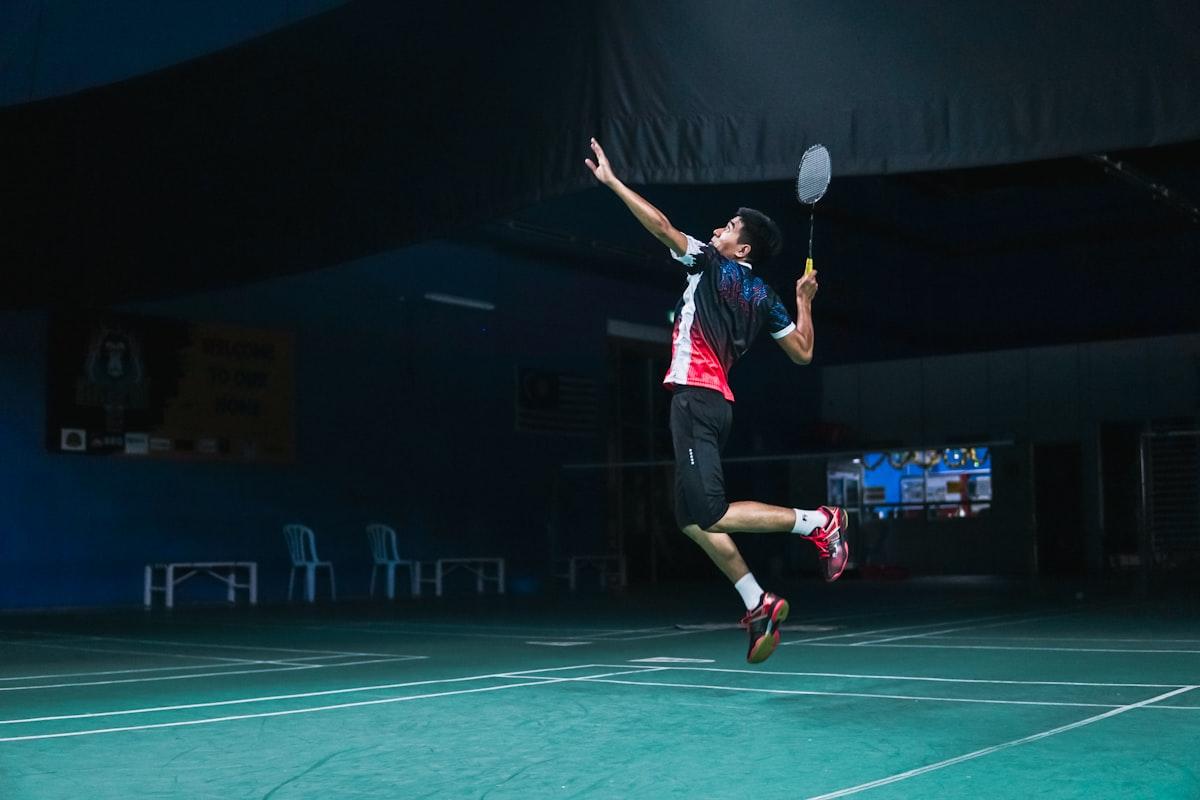
That means agility work (lateral movement, change of direction), explosive power training (jump smashes require serious leg strength), and endurance conditioning (rallies in competitive badminton are relentless). At LevelUP, this conditioning is woven into every session, not bolted on as a separate “fitness class.”
The badminton program at LevelUP also connects with the Kids Agility training, giving younger athletes a foundation of movement skills that accelerates their badminton development.
Who Benefits from Academy Training?
The honest answer: anyone who wants to improve. Academy training isn’t just for kids aiming for scholarships or national teams. Adults who’ve been playing recreationally for years often see the biggest jumps in performance because they have game experience but have never had their technique properly coached.
That said, the players who benefit most are those willing to commit to at least two sessions per week. Once per week maintains your level. Twice per week builds it. The academy at LevelUP runs multiple sessions throughout the week to make scheduling flexible. Check the schedule page for current times.
Getting Started
If you’re curious about what structured badminton coaching feels like, book a session at LevelUP. You don’t need to bring anything except athletic shoes and a willingness to work. Equipment is provided.
The difference between casual play and coached training is something you feel in the first session. You’ll leave knowing exactly what to work on and why. That alone is worth showing up for.
Explore the full Badminton Academy program or check out membership options for the best value on regular training.
Ready to train?
Put what you've learned into practice. Book a session at LevelUP Sports and work with our expert coaches.